10 / 29 · China
Qimen Dunjia
1Origin
2Prepare
阵Cast···
4Prediction
Before you begin
Know the tradition before you enter it
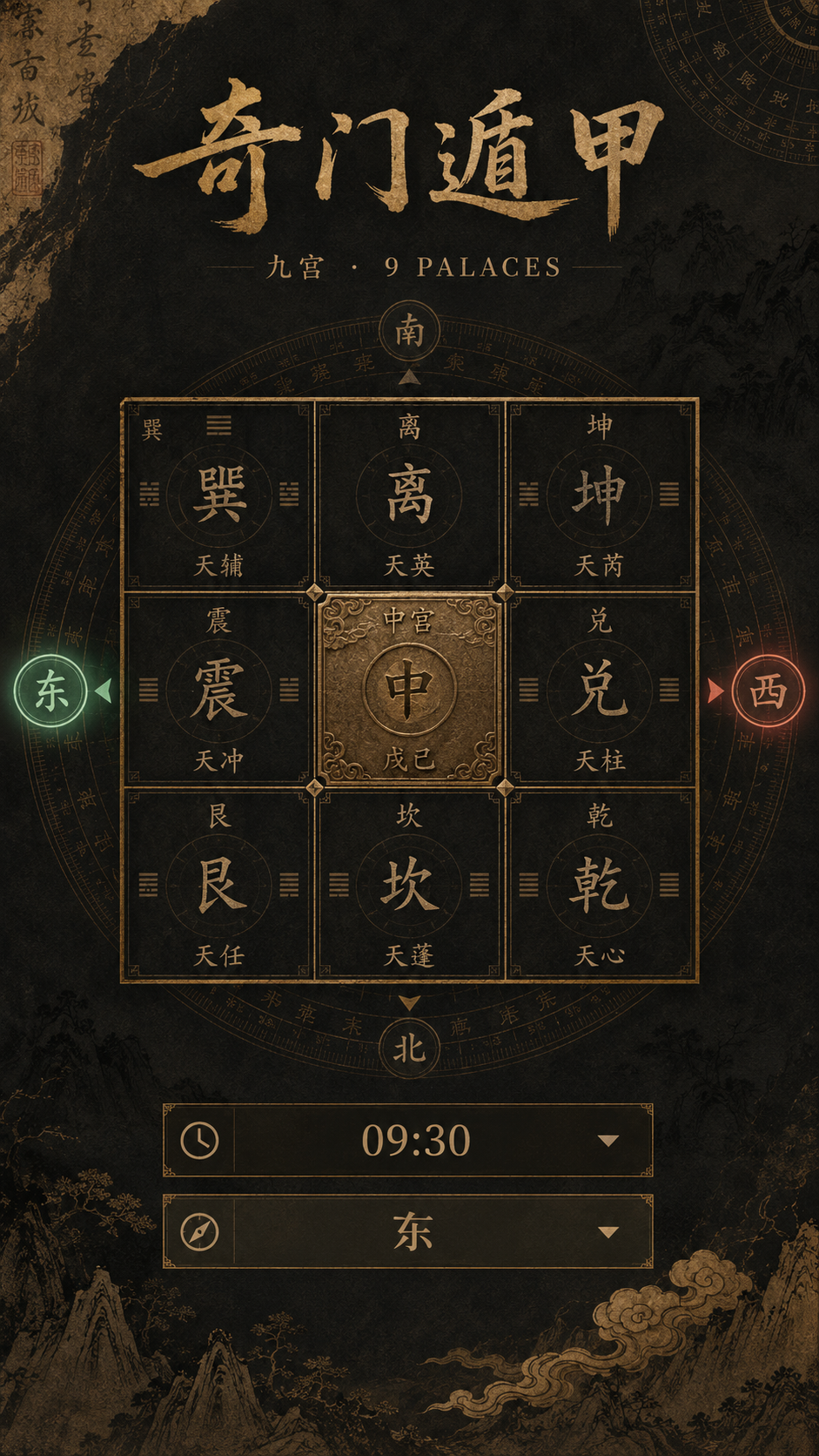
A strategic time-and-space system arranged through nine palaces to compare timing, direction, and action.
以九宫盘综合时间、方位与行动策略。
奇门遁甲
CULTURAL DOSSIERQimen Dunjia
- When did it emerge?
- Its documented roots belong to ancient and early imperial Chinese astro-calendrical practice, with major development over the Han through Tang and Song periods.
- What does it represent in China?
- Qimen Dunjia arranges time, direction, gates, stars, and spirits in nine palaces to compare strategic conditions for movement and action.
- Who developed or used it?
- Legends connect it to the Yellow Emperor and Feng Hou; historical practice was developed by anonymous court specialists, military advisers, and calendrical experts.
- What did practitioners actually do?
- A board is constructed for a particular time, then relationships among palaces are read for timing, direction, advantage, concealment, and exposure.
Historical noteThe legendary origin story is not the same as documented history, and a real Qimen chart requires a full calendrical engine.
How this experience works
Describe the planned action, its intended time, and the direction or place involved.
说明计划采取的行动、时间以及相关方位或地点。