06 / 29 · China
Six-Line I Ching
1Origin
2Prepare
皆Cast······
4Prediction
Before you begin
Know the tradition before you enter it
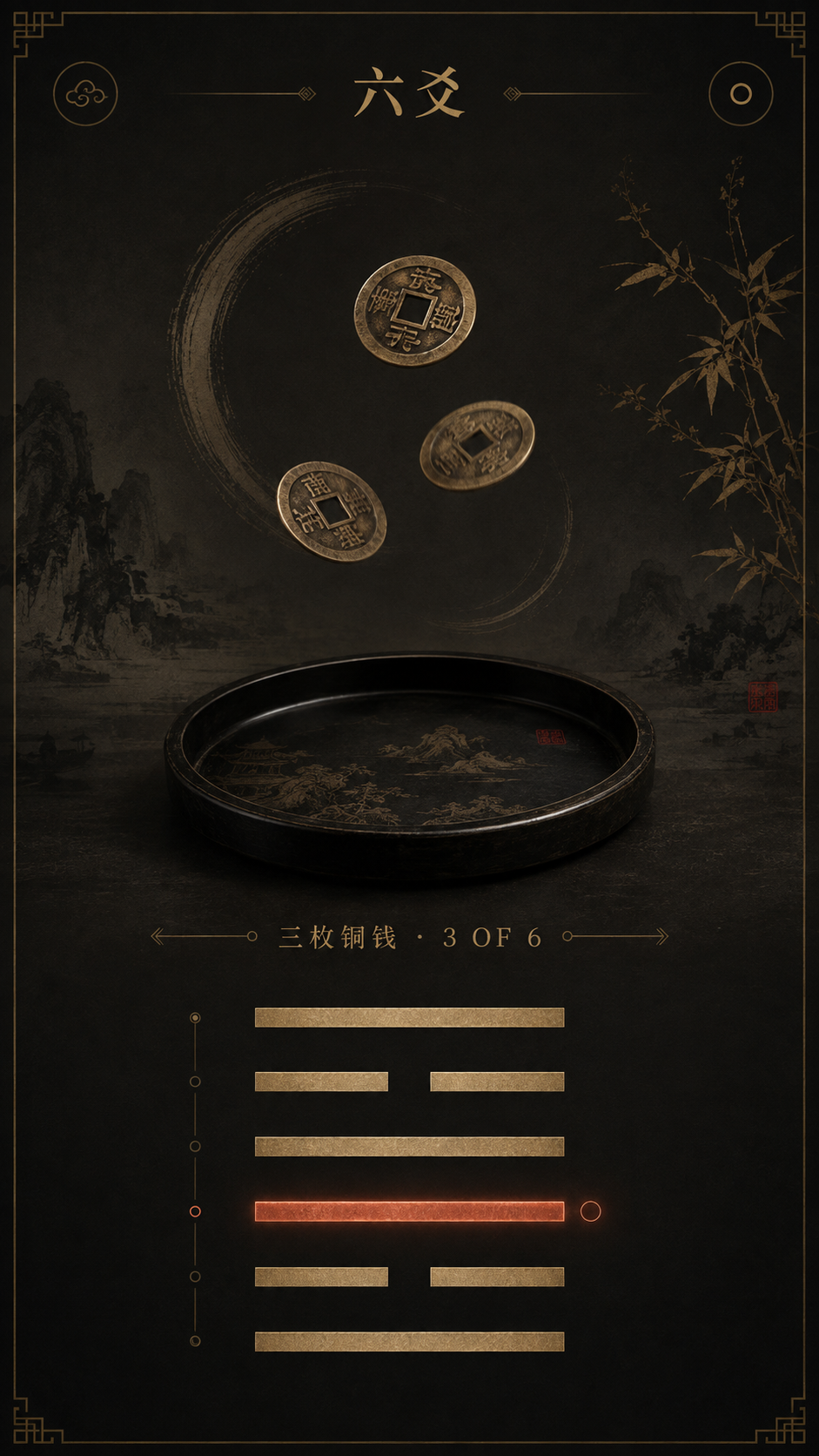
Three coins are cast six times. The lines are placed from bottom to top to form a primary and, when lines change, relating hexagram.
三枚铜钱连续投掷六次,自下而上形成六爻、本卦与变卦。
六爻
CULTURAL DOSSIERSix-Line I Ching
- When did it emerge?
- Its foundation is the Zhou Changes, compiled more than 2,500 years ago; later line, branch, and coin methods developed over subsequent dynasties.
- What does it represent in China?
- Six lines create one of the 64 hexagrams of the Book of Changes. The image describes a changing situation, not a permanent fate.
- Who developed or used it?
- Han scholar Jing Fang is strongly associated with later line-and-branch techniques. The familiar three-coin method is later than the ancient yarrow ritual and has no single confirmed inventor.
- What did practitioners actually do?
- Three coins are cast six times from the bottom line upward. Moving lines transform the primary hexagram into a relating hexagram.
Historical noteCalling every modern coin reading an original Zhou-dynasty procedure would be historically inaccurate.
How this experience works
Hold one question in mind. Cast the coins once for each line; do not change your question midway.
始终专注同一个问题,逐次投币形成六条爻线。