05 / 29 · China
Jiaobei Moon Blocks
1Origin
2Prepare
灵Cast···
4Prediction
Before you begin
Know the tradition before you enter it
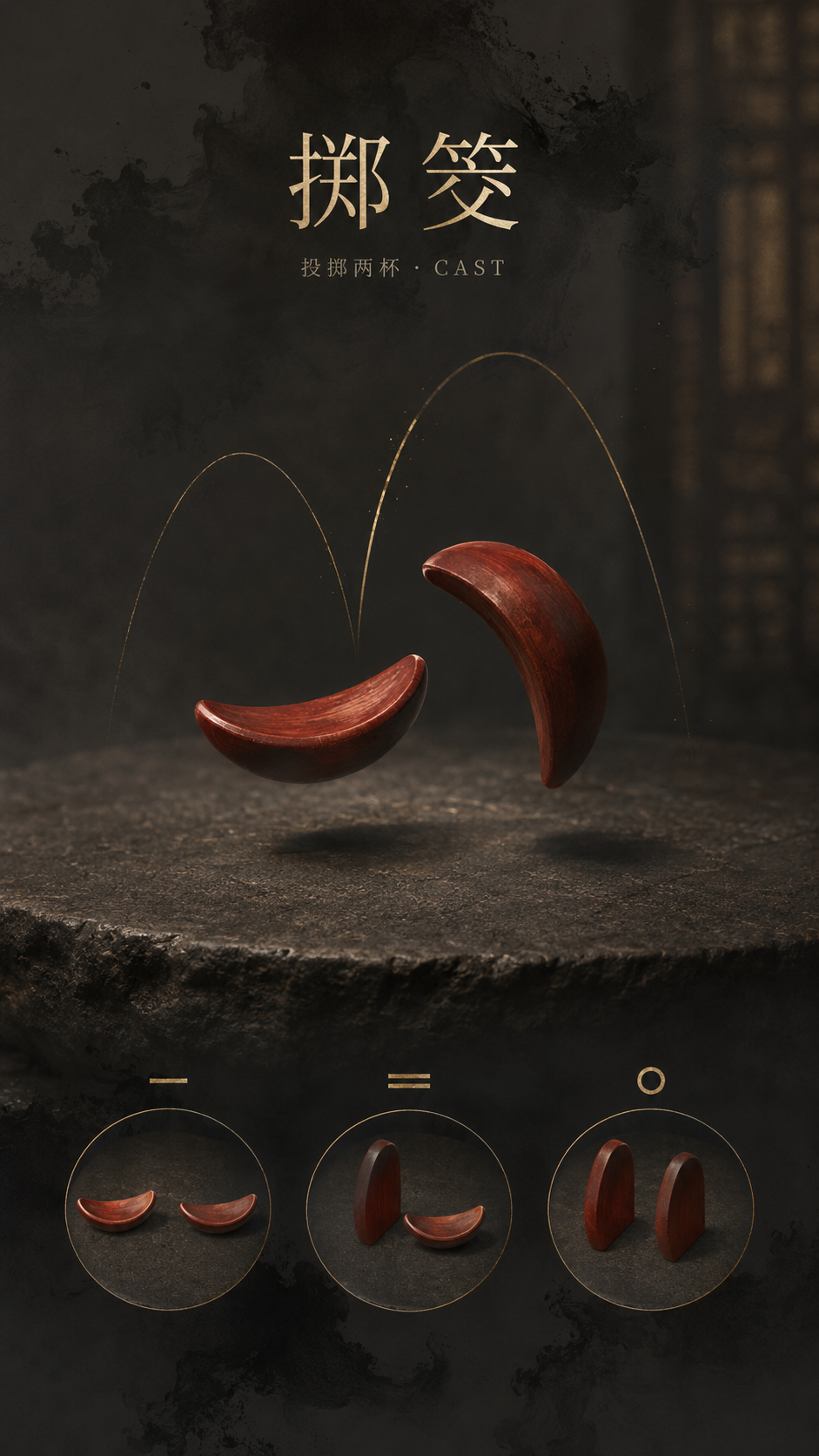
Paired crescent-shaped blocks are cast to receive a sacred yes, a laughing uncertainty, or a negative response.
两枚筊杯落地,以正反组合回应所问之事。
掷筊
CULTURAL DOSSIERJiaobei Moon Blocks
- When did it emerge?
- Casting paired moon blocks is an old temple practice with roots in premodern Chinese popular religion; no precise first date or inventor is known.
- What does it represent in China?
- It is a ritual dialogue with a deity or sacred presence, commonly seen in Daoist and Chinese folk-religious temples.
- Who developed or used it?
- The practice was carried by temple communities rather than founded by a named author.
- What did practitioners actually do?
- Two crescent blocks fall with flat or rounded faces upward. Their combination is traditionally read as assent, refusal, or an unclear or laughing response, often with repeated confirmation.
Historical noteCustoms and names vary by region and temple. It should not be presented as a universal mechanical yes-or-no machine.
How this experience works
Ask a question that can be answered by yes, no, or not yet. You may cast up to three times.
提出可用是、否或时机未到回答的问题,最多掷三次。